
Mr. Naoshi Matsumoto is a renowned Chilean businessman with extensive experience spanning various industries, including real estate, finance, mining, manufacturing, hospitality, transportation, and automotive sectors, among others. He is the founder of Sunland Group, a Miami-based conglomerate that involves companies engaged in real estate development, architecture, construction, and private lending, among other ventures. Since its establishment in 2015, the company has experienced rapid growth and has achieved remarkable success in acquiring and selling multimillion-dollar real estate projects throughout Miami.
As the founder of Sunland Group, Mr. Matsumoto has played a remarkable leadership role, guiding the company through its business foundations, core values, quality standards, key financial decisions, and team formation, among others. By instilling a culture of continuous improvement, he has spearheaded a transformative shift in the standards of residential real estate development in Miami. With a solid project pipeline and strong financial projections, Sunland Group is positioned to become a leader in the residential real estate development sector in South Florida.
Sunland Group is vertically integrated across development, architecture, construction, brokerage, and private lending. This is something still relatively rare in residential real estate. Why was it important for the firm to control the entire lifecycle of a project under one umbrella?
Vertical integration was never about expansion for the sake of scale. It was about control, alignment, and execution quality, with the ultimate goal of increasing efficiency and transparency to further elevate the client experience. In residential development, value is created or lost across multiple disciplines: design decisions affect construction efficiency, construction impacts cost structure, brokerage shapes positioning and pricing, and financing determines accessibility and deal flow. When these functions operate in silos, friction, misalignment, and unnecessary uncertainty are inevitable.
By integrating architecture, construction, brokerage, and private lending under one umbrella, we ensure that every decision is made with the same strategic vision and economic objectives in mind. That alignment reduces inefficiencies, accelerates execution, and allows us to optimize both design integrity and financial performance simultaneously, as well as creates a more seamless and consistent experience for the client.
From a risk management perspective, it also gives us greater visibility into costs, timelines, and market positioning in real time. We are not dependent on external coordination between independent entities, accountability sits within the same organization. That structure enables us to move faster, adapt to market conditions, and consistently deliver with a higher degree of quality, clarity, control, and confidence.
Sunland Real Estate, the brokerage subsidiary of Sunland Group, recently unveiled a rebrand that reflects the company’s evolution as it has grown across multiple segments of the market. That growth has led to the creation of two distinct subdivisions, Sunland Real Estate Exclusives and Sunland Real Estate Land Broker. What prompted this shift? And how do the rebrand and new structure support Sunland’s long-term vision, focus, and aesthetic?
As our company expanded across multiple market segments, it became clear that our activities were evolving into distinct strategic pillars with different audiences, positioning, and operational dynamics. The rebrand and the creation of two dedicated divisions were a natural step to bring clarity to that structure, both internally and externally.
Sunland Real Estate Exclusives was designed to showcase and elevate our vertically integrated development projects under a focused brand that reflects design quality, execution, and long-term vision, offering a more curated and consistent experience for buyers. Sunland Real Estate Land Broker, the Land Division, by contrast, serves Florida landowners and investors with a specialized approach tailored to land transactions.
Structuring these areas separately helps avoid confusion between the different segments we serve while allowing each division to operate with greater precision and strategic focus.
From a sales perspective, how does representing properties that your firm also designs and builds change the way you approach marketing, pricing, and advising clients?
Representing properties that we also design and build fundamentally changes how we approach sales. We are not simply marketing a finished asset. We understand the full context behind every decision that shaped it. That depth of knowledge strengthens how we position, price, and advise clients, providing them with even greater confidence.
From a marketing perspective, we can communicate the project with authenticity and technical precision because the team selling the property is directly connected to the architects and builders who executed it. That alignment allows us to highlight design intent, material selection, cost structure, and functional advantages in a way that external brokers typically cannot. This helps buyers better understand what they are acquiring and reduces uncertainty in the decision-making process.
In terms of pricing, we rely on data, construction economics, and market performance rather than purely comparable transactions. Because we understand the embedded value and development cost structure, we can price strategically while protecting long-term value.
Most importantly, advising clients becomes more consultative than transactional. We are able to guide buyers through design rationale, customization possibilities, and investment considerations with complete transparency, creating a more informed, efficient, and confident purchase experience.
Vertical integration often requires a long-term mindset rather than chasing short-term wins. How does this structure allow Sunland Group to think more strategically about value creation, risk management, and market cycles?
Vertical integration naturally pushes us to think long term because all of our functions are aligned around the same outcome: value creation over time rather than short-term volume. When development, architecture, construction, and brokerage operate under the same umbrella, decisions are made with visibility into the full lifecycle of a project.
That visibility improves how we manage risk. We understand our cost structure, execution timelines, and market positioning in real time, which allows us to adjust more intelligently as conditions change. In volatile market cycles, internal coordination becomes a stabilizing factor because we are not dependent on fragmented external inputs to make critical decisions.
It also strengthens how we create value. Efficiencies generated in design or construction directly impact the overall economics of the project, and that benefit stays within the same ecosystem, translating into better pricing discipline, stronger execution, and more consistent client outcomes.
In practice, this structure allows us to remain disciplined during downturns and intentional during periods of growth, always focused on delivering assets that are well-positioned, efficiently executed, and built to perform over time.
Looking ahead, how do you see this integrated model, along with the firm’s newly created divisions, positioning Sunland Group as the market continues to evolve, particularly amid shifting buyer preferences and increased scrutiny around quality, design, and execution?
Our structure positions us to remain adaptable as market expectations continue to evolve. Buyers today are more focused than ever on quality, transparency, design integrity, and long-term performance, not just product availability. Having an integrated model allows us to respond to those demands with alignment across development, design, construction, and sales.
Because we control the key stages of a project internally, we maintain tighter oversight over execution and standards. This translates into a more consistent and reliable experience for buyers, with fewer uncertainties throughout the process.
As scrutiny around quality and delivery increases across the industry, this level of control becomes a meaningful advantage. It allows us to scale strategically while preserving the clarity, efficiency, and craftsmanship that ultimately define the client experience and the long-term value of each asset.
Through Sunland Exclusives, what demand trends are you seeing among high-net-worth buyers today, and why do single-family homes feel especially relevant right now?
We are seeing a continued flight toward quality and privacy among high-net-worth buyers. Today’s luxury client is highly informed and increasingly selective. They are prioritizing prime locations, architectural distinction, construction integrity, and long-term value over sheer size or trend-driven features.
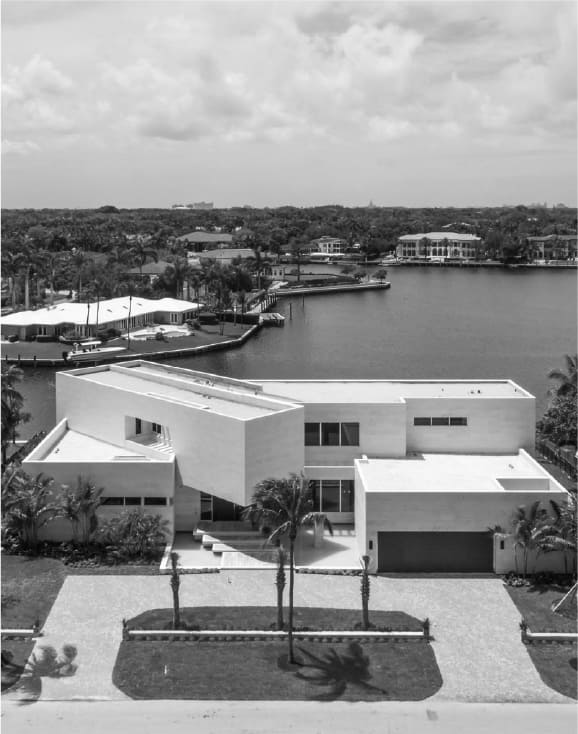
Waterfront single-family homes respond directly to those preferences. They offer privacy, control, and a level of personalization that condominium living cannot replicate, while also providing a clearer and more predictable ownership structure. Particularly in South Florida, direct water access, private docks, and seamless indoor-outdoor integration remain highly sought-after attributes, not just as lifestyle elements, but as enduring value drivers.
Another clear trend is the desire for turnkey products executed at high level. Buyers want design coherence, quality materials, and thoughtful layouts, but they also want confidence in execution. When a property reflects architectural discipline and strong construction oversight, it reduces uncertainty and streamlines the sales process.
Single-family luxury homes feel especially relevant in this environment because they combine scarcity, control, and long-term positioning. In prime waterfront neighborhoods, well-designed inventory remains limited, and that scarcity continues to support demand from both domestic and international buyers who are looking for stability and asset preservation as much as lifestyle.
With the South Florida condominium market facing growing headwinds – from rising HOA costs to insurance and assessments – how are buyers reassessing the value proposition of owning a private waterfront home versus a condo?
Buyers are becoming far more focused on total cost of ownership. Rising HOA fees, insurance premiums, and special assessments in the condos market have shifted attention from purchase price to long-term financial exposure. Particularly at the high-end, predictability and control matter more than ever.
A private waterfront home offers a different equation. While owners assume direct responsibility for maintenance and insurance, they avoid collective financial risk tied to association decisions or building-wide liabilities, and benefit from greater decision-making control. That autonomy and transparency are increasingly attractive.
As carrying costs in vertical living continue to rise, many buyers are reassessing whether shared structures align with their long-term financial and lifestyle goals. In that environment, well-located waterfront single-family homes are being viewed as more controlled and resilient ownership options.
Beyond location, what differentiates a Sunland Real Estate Exclusives home in terms of lifestyle, privacy, and long-term investment compared to other luxury offerings in Miami?
Location is foundational, but it is no longer enough on its own. What differentiates a Sunland Real Estate Exclusives home is the intentional integration between design, construction, and long-term positioning from the very beginning of the project.
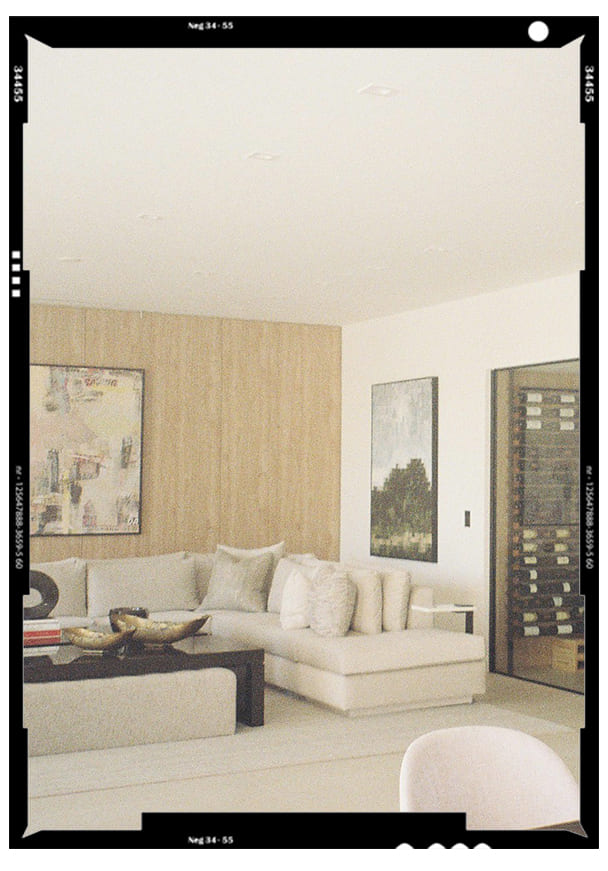
From a lifestyle perspective, our homes are conceived around privacy, elevation, and functional flow, particularly in waterfront settings where views, light, and indoor-outdoor transitions define daily living. These are not speculative builds driven purely by trend. They are disciplined architectural exercises executed with long-term usability in mind. This creates a more intuitive and elevated living experience for the buyer.
In terms of privacy, we prioritize lot selection, spatial planning, and elevation strategies to enhance discretion without compromising openness. That balance is especially relevant in ultra-luxury neighborhoods where proximity and density can otherwise reduce exclusivity.
From an investment standpoint, the differentiation lies in scarcity and execution quality. We develop a limited number of properties, each with a strong architectural identity and construction oversight rooted in our integrated model. That approach reduces variability and supports asset resilience over time, increasing confidence in the final product.
Ultimately, the distinction is not just aesthetic, it’s structural. It comes from controlling the lifecycle of the asset and aligning design integrity with financial discipline, allowing clients to clearly understand and trust the value behind what they are acquiring.
Sunland Real Estate recently launched its land division, Sunland Real Estate Land Broker, after identifying a gap in how landowners are represented. What did you see happening in the market that convinced you this was both a business opportunity and a service need?
We began noticing a consistent pattern: many landowners were underserved. Raw land was often treated as a secondary asset class within traditional brokerages, marketed passively, priced inconsistently, and lacking a data-driven positioning strategy. At the same time, owners were increasingly looking for clarity around value and exit timing. As a result, they were often left without the visibility needed to make informed decisions.
From a market standpoint, population growth across Florida and sustained development activity created stronger demand for land, but representation did not evolve at the same pace. There was a gap between how sophisticated buyers and developers underwrite land and how many sellers were advised to bring it to market.
We saw both a business opportunity and a service need in bringing structure, transparency, and specialization to that segment. Land requires a different approach: understanding zoning, entitlement potential, infrastructure access, holding costs, and buyer profiles. It is not just a simplified residential transaction.
By launching a dedicated land division, we created a platform designed to provide landowners with clearer pricing guidance, stronger exposure, and a more strategic path to market, ultimately improving both efficiency and outcome for the client.
Many landowners across Florida lack access to sophisticated brokerage representation and fair pricing strategies. How does Sunland Real Estate Land Broker change that equation, and why do you see potential for this platform to scale beyond Florida?
Land owners in Florida are often operating with limited data and limited exposure. In many cases, they receive pricing guidance based on incomplete comparables or local anecdotal references rather than a structured valuation framework. That frequently leads to underpricing or to listings that sit on the market without a defined strategy.
Sunland Real Estate Land Broker changes that equation by approaching land as an asset that requires underwriting discipline. We evaluate zoning, development potential, absorption trends, infrastructure proximity, and buyer demand before recommending a pricing strategy. In parallel, we leverage digital marketing and broader buyer networks to expand exposure beyond purely local channels. For clients, this results in a more transparent process, better-informed decisions, and stronger positioning in the market.
The platform is built around process and analytics, not geography. The inefficiencies we identified in Florida are not unique to this state. They exist in many growth markets where land is transitioning from passive ownership to active development. Because our model is structured, data-driven, and technology-enabled, it is inherently scalable.
As population migration and development patterns continue to reshape regional markets, we see strong potential to extend this approach into other states where landowners are seeking greater transparency, reach, and strategic guidance for better outcomes.
press inquiries
Sunland Real Estate
Exclusives Gallery